

.webp)









One of the questions we get when someone buys a new boat isn't really about the boat at all.
It's about the trailer.
"Do I need a tandem axle?"
"Should I get brakes?"
"Do I really need a spare tire?"
"And what's the difference between all these options?"
The answer depends less on what boat you bought and more on how you plan to use it.
A smaller boat that gets hauled a few miles to the lake doesn't need the same trailer as a large tritoon that gets pulled across Ohio every weekend. And buying the biggest pontoon trailer available isn't necessarily the right answer either.
At Charles Mill Marina, we sell and rig a lot of boats and pontoon trailers, so we've learned to start with a simple question:
How are you actually going to use your boat?
Here's how we generally look at it.
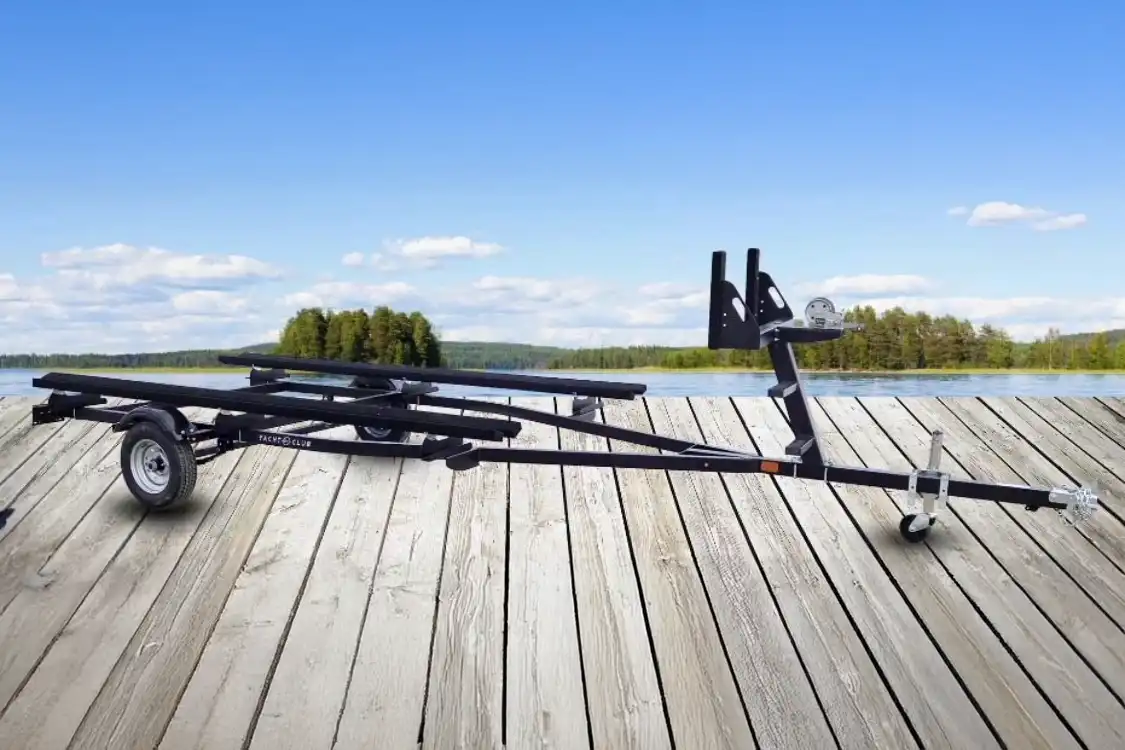
Single-Axle Trailers: Simple and Practical
For smaller boats, a single-axle trailer is often all you need.
As a general rule, we like a single axle for boats 20 feet and shorter with smaller outboards, generally 40 horsepower and below, assuming the boat and its loaded weight are within the trailer's capacity.
There are some real advantages to keeping things simple. A single-axle trailer is generally lighter, easier to maneuver and less expensive to maintain. You have two tires instead of four, fewer wheel bearings and fewer components to worry about when the trailer is sitting in your driveway.
For someone with a smaller pontoon, fishing boat or deck boat who is making relatively short trips to the lake, a single axle can be a great fit.
The biggest thing we'd add to a single-axle trailer? A spare tire.
With a single axle, there are only two tires carrying the trailer. If one goes flat while you're on the road, you're not going anywhere until that tire is repaired or replaced.
A spare tire is one of those options you may never need. But if you do need it, you'll be very glad you have it.
 Tandem-Axle Trailers: A Good Fit for Larger Pontoon Boats and Tritoons
Once you get into larger boats, the conversation changes.
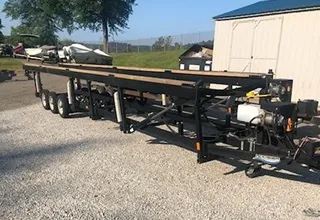
A tandem-axle trailer gives you two axles and four tires supporting the boat, which provides additional load capacity and support for larger, heavier boats.
But there's an important distinction here.
Not every tandem-axle trailer is intended for the same type of use.
We sometimes use tandem-axle trailers without brakes for customers who primarily need a trailer to move a larger boat between storage and the marina.
Think about the customer who keeps their pontoon or tritoon in an outdoor storage lot during the winter. In the spring, the boat gets pulled from storage and taken to the marina. In the fall, it goes back to storage.
That's a very different use case from someone who is going to tow the boat to Lake Erie one weekend, Indian Lake the next weekend and another lake in Michigan the weekend after that.
For the customer who is primarily using the trailer as a storage trailer, a tandem axle can provide the support needed for a larger boat without necessarily adding every feature you'd want on a trailer that's going to see frequent road travel.
This can be a particularly practical setup for larger boats with horsepower well above 50 horsepower that don't spend much time being trailered.
Of course, the specific trailer still needs to be properly rated for the boat and its loaded weight, and applicable brake requirements need to be considered for where and how the trailer will be used.
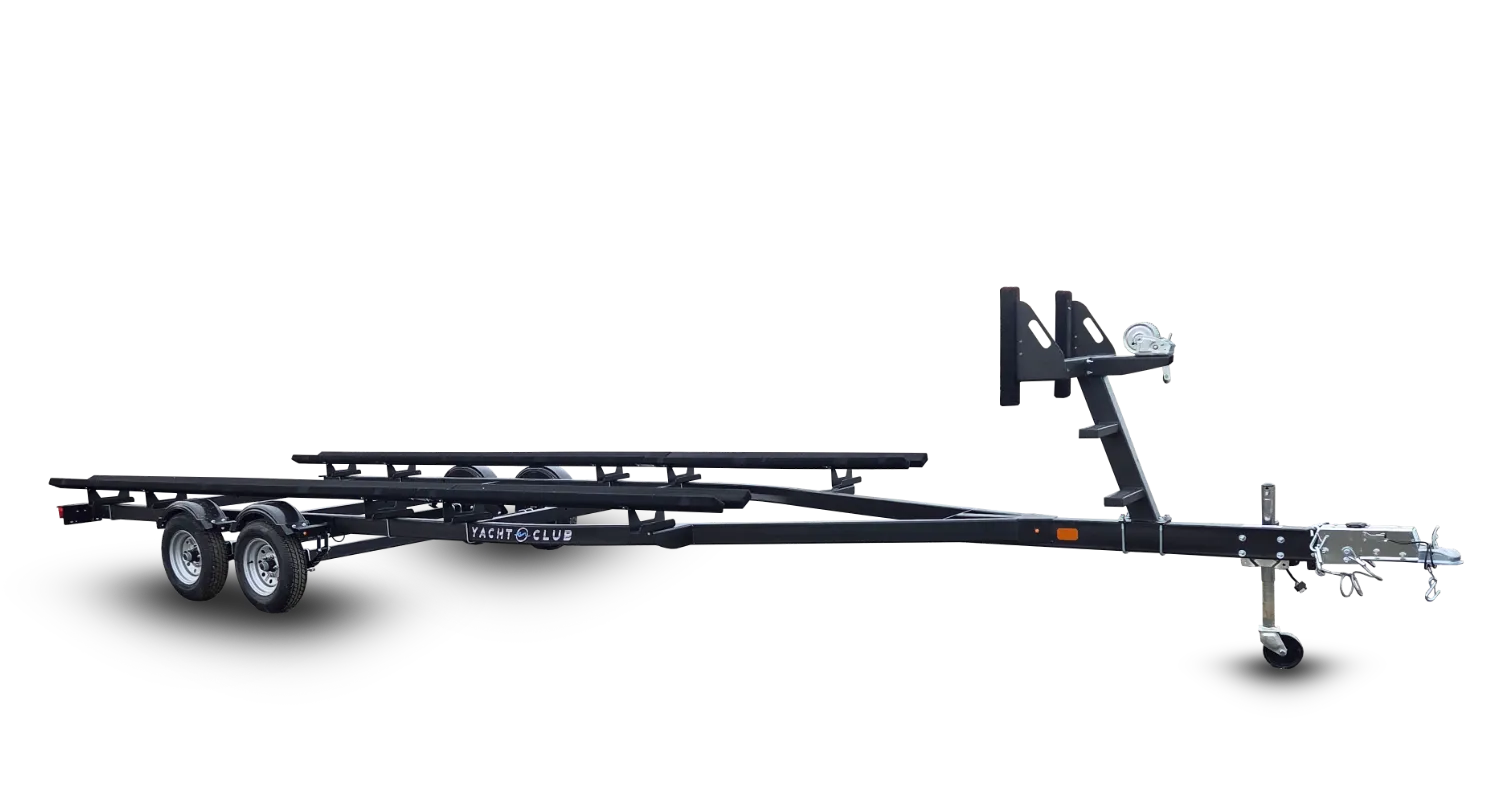 Tandem-Axle Trailers With Brakes: For Regular Towing
If you're going to regularly trailer your boat, this is the configuration we'd generally recommend.
A tandem-axle trailer with brakes combines the additional support of two axles with a braking system designed to help control the weight you're towing.
This is the trailer we'd recommend considering if you:
Regularly tow your boat to different lakes
Take your boat on vacation
Frequently launch and retrieve your boat
Travel longer distances with your boat
Keep your boat at home and regularly drive it to the water
Own a larger pontoon or tritoon that will see significant road use
And this isn't just about big boats.
A smaller boat can also benefit from a tandem-axle trailer if the owner plans to tow it frequently.
That's one of the biggest things we try to explain to customers: trailer selection isn't just about boat length. It's about the boat, its weight and how you're going to use it.
If your boat is going to spend most of its life at the marina and only travel a couple of times a year, you may have different needs than someone who puts several hundred road miles on their trailer every summer.
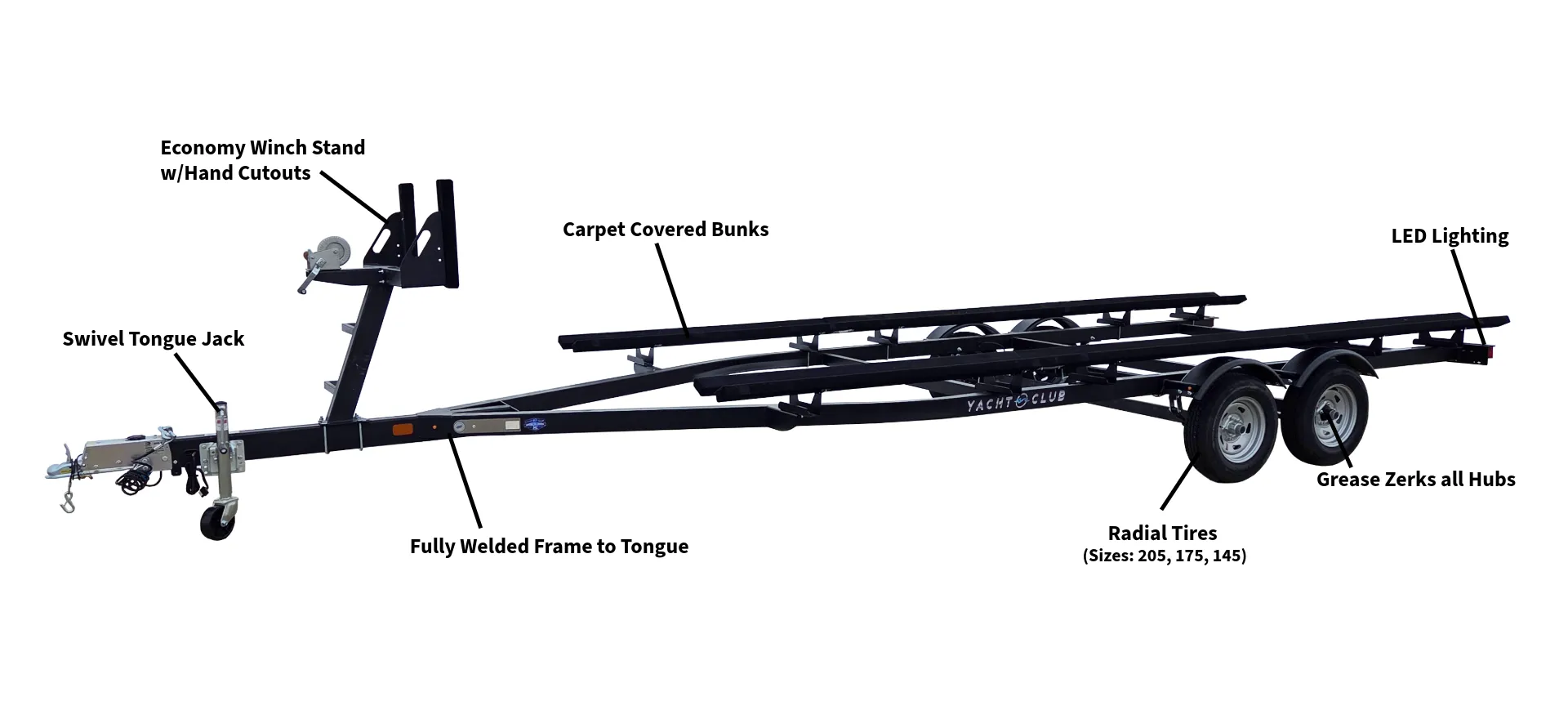 So Which Trailer Is Right for You?
Here's the simple version of how we typically approach it:
Single axle:
A good choice for smaller boats, particularly boats 20 feet and shorter with smaller horsepower, generally 40 horsepower and below. They're simple, economical and easy to maneuver.
Tandem axle without brakes:
A good fit for larger boats that are primarily being moved between a storage lot and the marina and won't see regular road travel.
Tandem axle with brakes:
The configuration we'd generally recommend for boats that are going to be trailered regularly, whether they're small or large.
There isn't one trailer that's automatically better for every boat owner. The right trailer is the one that matches the job you're asking it to do.
Don't Overlook the Trailer Options
The trailer itself is only part of the equation.
There are a few options that can make a surprisingly big difference in how easy your boat is to own.
Load Guides
If you've ever tried to load a boat on a trailer while dealing with wind or current, you already know that getting the boat lined up perfectly isn't always easy.
Load guides help give you a visual target as you bring the boat onto the trailer. They help keep the boat centered and make the loading process much more predictable.
For someone who trailers their boat regularly, load guides are one of those options that can make you wonder how you ever lived without them.
They're especially helpful for newer boaters who may still be getting comfortable with loading and unloading their boat.
Spare Tire
We've already mentioned this one, but it deserves repeating.
A spare tire is cheap insurance.
It's particularly important on a single-axle trailer because a single flat tire means you're immediately out of service.
But even on a tandem-axle trailer, a spare tire is worth having. A flat tire can still ruin a day on the water or turn a simple drive home into a roadside repair.
If you're going to regularly travel with your boat, we'd rather see you have a spare tire and never need it than need one and not have it.
Tritoon Bunks
If you're buying a tritoon, make sure you're putting it on a trailer designed to properly support a tritoon.
Tritoons have a third center tube, so the trailer needs the appropriate bunk configuration to support the boat correctly.
It's a small detail that isn't very exciting to talk about when you're buying a boat, but it's important to get it right from the beginning.
The Trailer Should Match the Way You Boat
There's a temptation to think that the answer is simple: bigger boat means bigger trailer.
But that's not really the whole story.
A 22-foot pontoon that gets moved from a storage lot to a marina twice a year has a very different trailer requirement from a 20-foot boat that gets hauled to five different lakes every summer.
Likewise, a smaller boat doesn't automatically mean a single-axle trailer is the best choice if you're planning to put a lot of miles on it.
Think about where your boat will live, how often you'll tow it, how far you'll travel and how much the boat weighs when it's loaded with its motor, fuel and gear.
Then choose the trailer around that.
So Which One Is You?
A single axle may be right for you when:
Your boat is 20 feet or shorter
You're running a smaller outboard, generally 40 horsepower or below
Your boat is relatively light
You're primarily making shorter trips
You want a simple, easy-to-maneuver trailer
You're looking to keep the trailer cost and maintenance lower
A tandem axle without brakes may be right for you when:
You have a larger or heavier boat
Your boat is primarily stored away from the marina
You're mainly moving the boat between storage and the marina
You're only towing the boat a few times a year
You're not planning regular long-distance travel
A tandem axle with brakes may be right for you when:
You regularly trailer your boat
You travel to different lakes
You take your boat on vacation
You regularly drive longer distances
You want the additional support of a tandem axle
Your boat is large or heavy and will see significant road use
And regardless of which trailer you choose, consider the options that make sense for how you boat. Load guides can make launching easier, a spare tire can save a trip when you have a flat, and tritoon-specific bunks make sure your boat is properly supported.
Come Talk to Us
The best time to figure out your trailer needs is before you buy the boat, not after.
When you're looking at a boat at Charles Mill Marina, we'll help you look at the entire package — the boat, motor, trailer, how much the boat weighs and, most importantly, how you plan to use it.
You don't necessarily need the biggest trailer we sell.
You need the right trailer for your boat and the way you boat.
Either way, we'd like to see you out on the water!