

.webp)








If you’re shopping for a new boat, there’s a good chance you’ve asked this question:
Should I buy a pontoon or a tritoon?
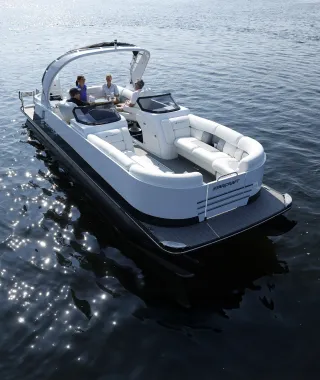
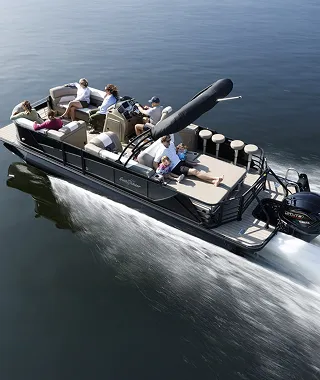
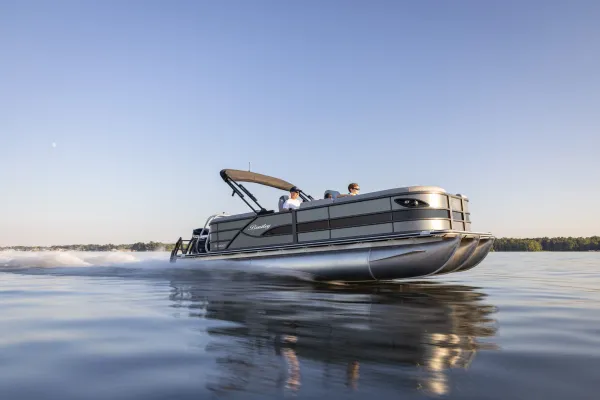
At first glance, they look almost identical. Same open deck. Same lounge seating. Same laid-back lake-day vibe.
But underneath? Very different story.
And depending on how you actually plan to use your boat, that difference can matter more than you think.
Let’s break it down the right way — no hype, no brand bias — just clarity so you can make the right call for you.
What’s the Real Difference?
The difference comes down to what’s under the deck.
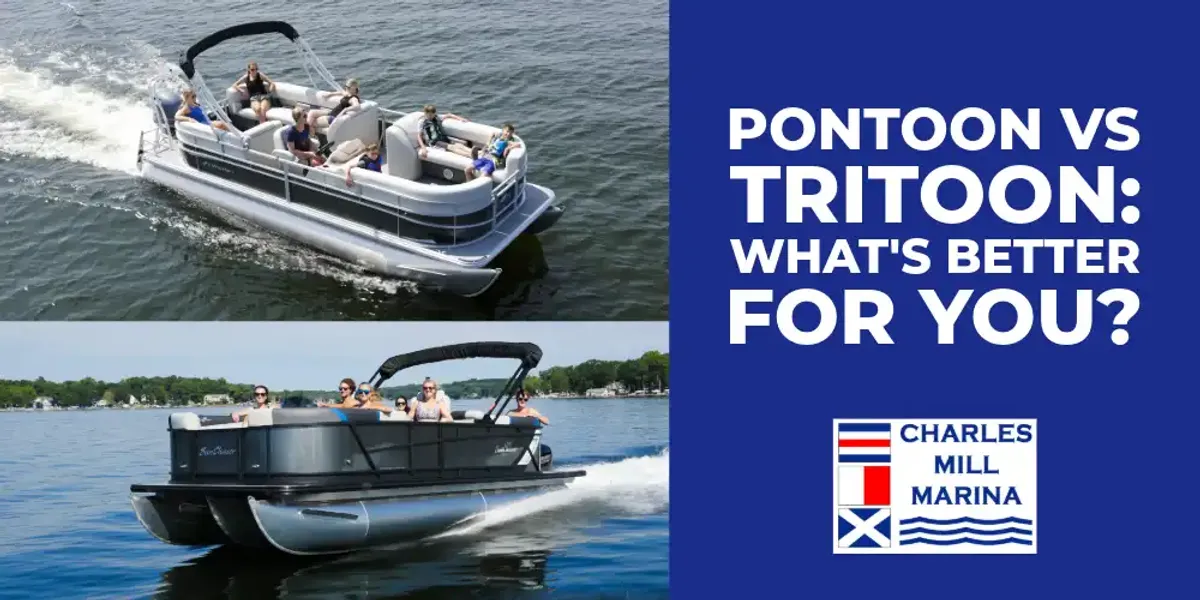
- A pontoon has two tubes (pontoons).
- A tritoon has three tubes — adding a center tube for extra stability and performance.
That third tube may not look like much, but it changes handling, horsepower capacity, and overall ride feel.
The real question is: Do you need what that third tube gives you?
Performance: Are You a Cruiser or a Thrill-Seeker?
If your ideal lake day involves:
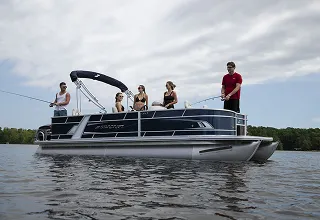
- Slow cruising
- Music playing
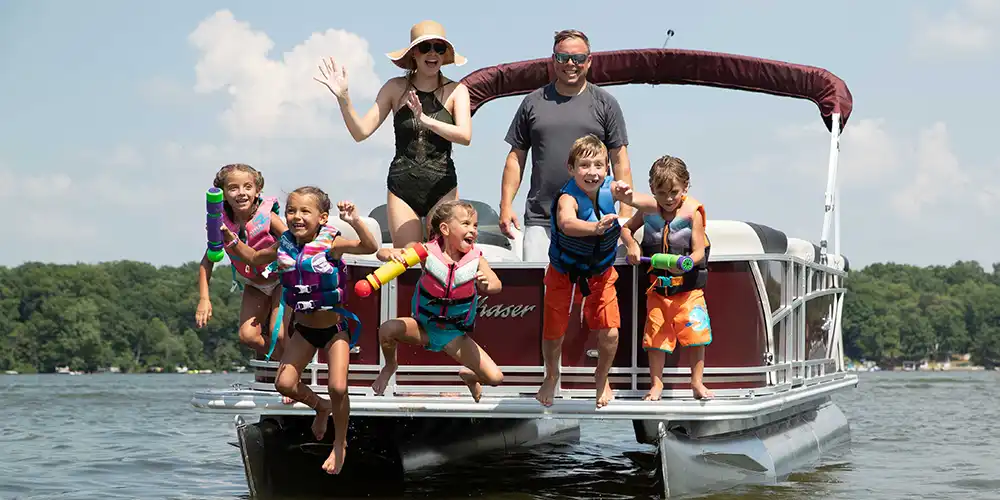
- Kids swimming off the back
- Anchoring in a quiet cove
A traditional pontoon will likely serve you beautifully. Most pontoons are powered between 90–150 HP and cruise comfortably in the 20–30 mph range.
But if your weekends look more like:
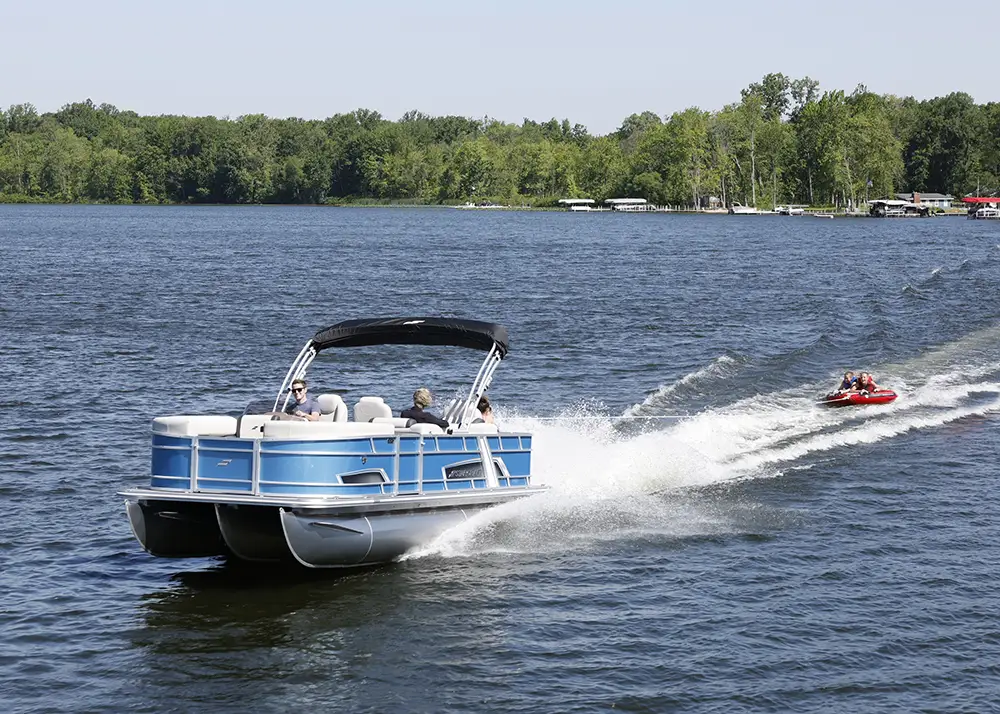
- Pulling wakeboarders or skiers
- Tubing hard with the kids
- Covering long distances quickly
- Boating on larger, windier lakes
That’s where the tritoon starts to shine.
Tritoons can handle significantly higher horsepower — often 200 HP and up — which means:
- Faster acceleration
- Higher top speeds
- Tighter turns
- More confident handling in chop
If performance matters, the tritoon wins. No debate.
Ride Quality: Does Your Lake Get Rough?
Here’s something many buyers overlook. On calm water, the difference between a pontoon and tritoon isn’t dramatic.
But add wind. Add boat traffic. Add wake.
A tritoon sits deeper and more balanced in the water. That center tube helps the boat carve instead of slide.
If you boat on:
- Large lakes
- Busy weekend waters
- Areas prone to afternoon chop
You’ll likely appreciate the added stability.
If your lake is small and generally calm? A pontoon will feel perfectly stable.
Cost: The Part No One Likes to Talk About
Let’s be honest. Tritoons cost more.
Depending on brand and engine size, you’re often looking at $5,000–$20,000+ more for that third tube and the horsepower that typically comes with it.
Why?
- More aluminum
- Stronger transom
- Bigger engine options
- Heavier construction
Now here’s the real question: Will you actually use the performance difference — or just like knowing you have it?
Many families buy tritoons “just in case.” Some use that power constantly. Others cruise at 22 mph all summer and realize they paid for speed they rarely use.
Fuel and Maintenance Considerations
More horsepower usually means:
- Higher fuel consumption
- Slightly higher maintenance costs over time
It’s not a dramatic difference for occasional boaters. But if you’re out every weekend, those operating costs add up.
If long-term cost efficiency matters, pontoons typically edge ahead.
Who Should Buy a Pontoon?
You’re likely a great fit for a pontoon if:
- You primarily cruise and relax
- Watersports aren’t a major focus
- Your lake is smaller or calm
- Budget matters
- You value simplicity
For many families, a pontoon checks every box.
Who Should Buy a Tritoon?
A tritoon probably makes sense if:
- You regularly tow skiers or wakeboarders
- You want strong acceleration
- You boat on larger lakes
- You want better resale potential
- You simply enjoy a more powerful ride
For performance-minded boaters, the tritoon feels like an upgrade.
So… Which Is Better?
Neither is universally “better.”
They’re built for slightly different lifestyles.
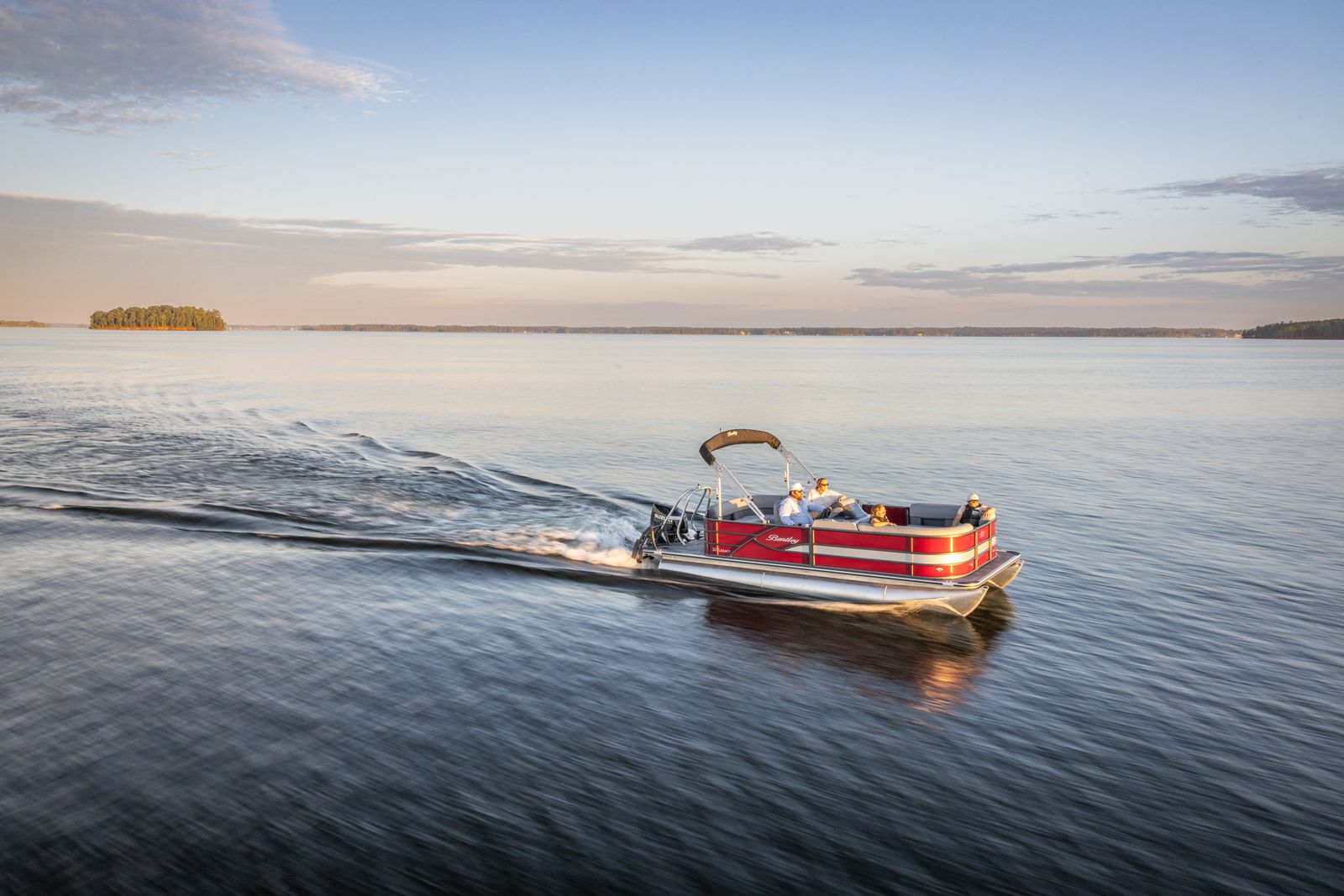
If your boating style leans toward entertaining and relaxing, a pontoon will likely exceed your expectations.
If your boating style leans toward action, speed, and versatility, a tritoon may be worth the investment.
The key is being honest about how you’ll actually use the boat — not how you imagine you might use it once or twice a year.
Final Thought
The biggest regret buyers experience isn’t choosing a pontoon over a tritoon — or vice versa.
It’s choosing based on emotion instead of usage.
Before you decide, ask yourself:
- How fast do I realistically want to go?
- How often will I tow watersports?
- What’s my actual budget ceiling?
- What kind of water conditions do I deal with?
Answer those honestly, and the decision becomes much clearer.