

.webp)



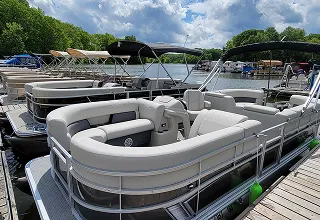
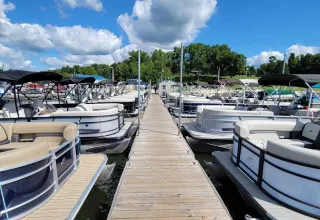
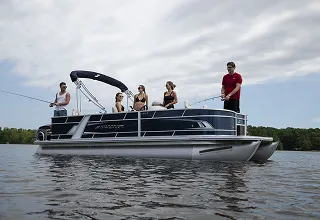
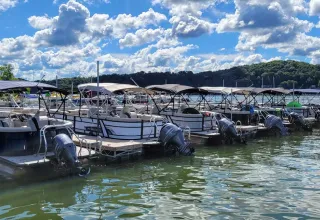






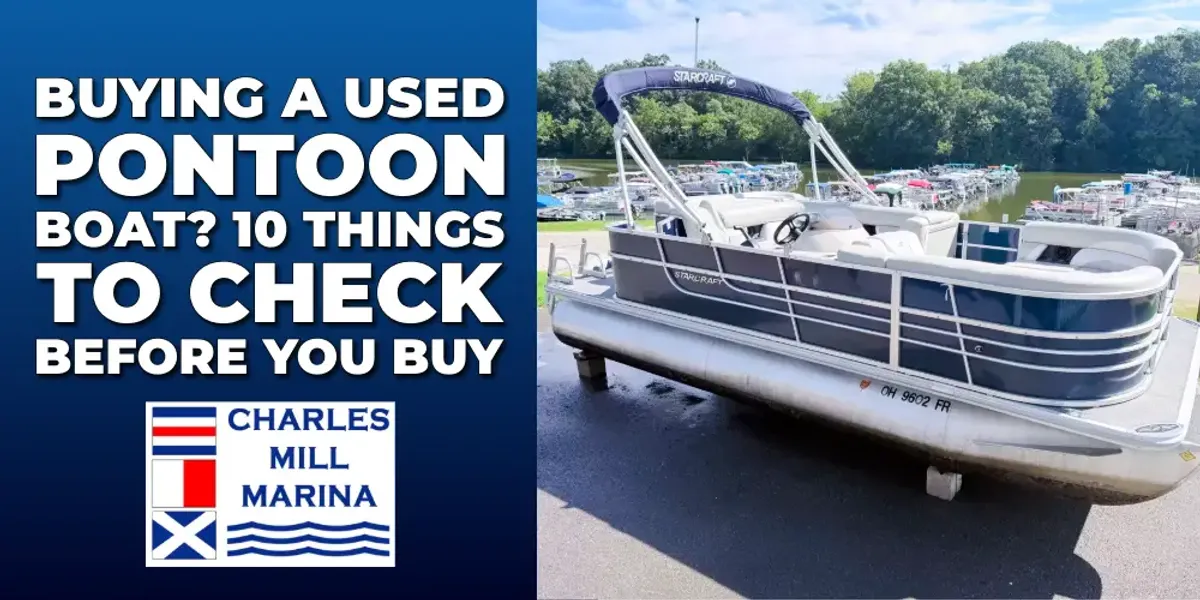
Shopping for a used pontoon boat can be a great way to get out on the water without spending the money required for a brand-new boat. There are plenty of good pre-owned pontoons available, and buying used can offer tremendous value.
But there's a difference between finding a good deal and making a good purchase.
If you've spent any time browsing Facebook Marketplace, Craigslist, or other online classifieds, you've probably seen the listings. Maybe it's a nice-looking pontoon with a relatively low price. The description says, "Runs great!" and "Everything works!" The seller might even tell you it's been sitting in the garage for a couple of years and was only used a handful of times.
Sounds promising, right?
But here's the problem: How do you really know?
Is the motor going to start when you get it to the lake? Does the electrical system work? Are there problems with the pontoons that aren't visible in the pictures? And perhaps most importantly, what happens if something stops working two days after you buy it?
Buying a used pontoon boat doesn't have to be a gamble. Whether you're purchasing from a private seller or an established marine dealership, here are 10 things you should check before handing over your money.
1. Inspect the Pontoons for Damage
The pontoons are the foundation of your boat, and their condition should be one of the first things you investigate.
Look closely at both tubes for:
Dents, deep scratches, or damaged sections.
Signs of previous repairs or patching.
Corrosion or deterioration around welds.
Damage near the nose cones and rear sections.
Signs of water intrusion.
Small cosmetic dents aren't necessarily a dealbreaker, but significant damage or poorly performed repairs deserve additional attention.
If possible, have the boat inspected while it's out of the water. It's much easier to evaluate the condition of the tubes when you can see the entire surface.
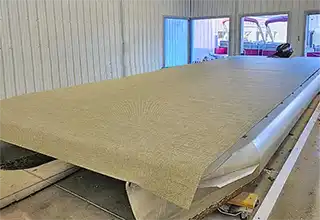
2. Check the Decking and Flooring
The deck is another area where problems can become expensive if they're overlooked.
Depending on the age and construction of the pontoon, the decking may consist of marine-grade plywood or another structural material. Water intrusion over time can lead to soft spots, deterioration, and structural problems.
Walk around the entire deck and pay attention to:
Soft or spongy areas underfoot.
Uneven flooring.
Signs of water damage.
Loose or deteriorating floor coverings.
Rust or deterioration around mounting hardware.
Areas that feel different from the surrounding deck.
Pay particular attention to the corners and areas around seating mounts and railings.
Replacing a floor can be a significant project, so it's worth understanding the condition before purchasing.
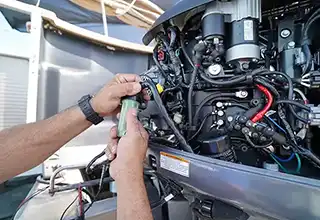
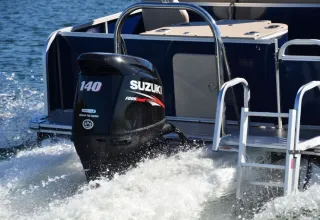
3. Have the Outboard Motor Properly Evaluated
This is probably the single most important mechanical component of your pontoon boat.
A used pontoon can look fantastic, have beautiful upholstery, and appear to be in excellent condition. But if the motor has problems, that attractive purchase can quickly become an expensive headache.
Here are some things to investigate:
Engine hours, if available.
Maintenance and service records.
Signs of oil or fuel leaks.
Corrosion around the powerhead and lower unit.
Condition of the propeller.
Smooth operation of the throttle and shifting.
Evidence of regular maintenance.
Whether the engine starts and runs properly.
Don't rely exclusively on the seller telling you the motor runs great.
Ideally, the motor should be evaluated by a qualified marine technician and operated under appropriate conditions. Starting an engine on a garden hose doesn't tell you everything about how it will perform under load on the water.
Also, remember that low engine hours don't automatically mean a motor is in great condition. How an engine has been maintained and stored matters tremendously.
4. Test the Electrical System and Electronics
Modern pontoon boats have quite a few electrical components, and you want to know that everything works before you take ownership.
Test as many systems as possible, including:
Navigation lights.
Interior and courtesy lighting.
Horn.
Bilge pump, if equipped.
Stereo and speakers.
Fish finders and GPS units.
Battery switches.
Power outlets.
Gauges and instrumentation.
Power bimini tops, if equipped.
Turn things on and off rather than simply assuming they're functional because they look good.
A stereo that doesn't power on or a gauge that gives inconsistent readings might be a relatively minor repair. Other electrical issues can be more complicated.
The important thing is knowing what works and what doesn't before agreeing on a purchase price.
5. Examine the Upholstery, Seats, and Canvas
One of the biggest reasons people purchase a pontoon is comfort. You want a boat that your family and friends will enjoy spending time on.
Unfortunately, upholstery can deteriorate over time, particularly when a boat has spent years exposed to the elements.
Look for:
Cracked or peeling vinyl.
Separated stitching.
Torn seat seams.
Mold or mildew.
Discoloration from sun exposure.
Damaged seat bases.
Worn-out flooring.
Tears or deterioration in the Bimini canvas.
Cosmetic issues aren't always a reason to walk away, but replacement costs can add up quickly.
A pontoon with worn-out seating might still be mechanically sound, but you'll want to factor those repairs into the overall value of the boat.
6. Inspect the Steering, Controls, and Safety Equipment
Before taking a used pontoon out on the water, make sure the basic operating systems are in good working order.
Check the steering wheel for excessive play or stiffness. Make sure the throttle and shift controls move smoothly and that the boat responds appropriately.
Also inspect:
Steering cables or hydraulic steering components.
Throttle and shift cables.
Emergency engine cutoff switch.
Fire extinguisher.
Navigation lights.
Horn.
Required personal flotation devices.
Other applicable safety equipment.
Some of these items are relatively inexpensive to replace, but they're important to safe operation.
If you're unfamiliar with a particular boat, having someone knowledgeable walk you through its controls and operation can make a big difference.
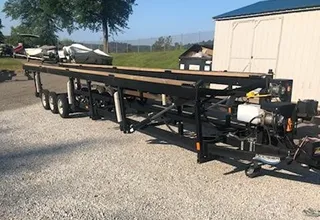
7. Look at the Trailer, Too
It's easy to get so focused on the boat that you forget about the trailer.
If the pontoon comes with a trailer, remember that you're purchasing another piece of equipment that needs to be safe and roadworthy.
Inspect:
Tires and tire age.
Wheel bearings.
Brakes and brake components.
Lights and wiring.
Winch and bow stop.
Bunks and support brackets.
Frame condition.
Hitch and safety chains.
Pay particular attention to corrosion and rust, especially if the trailer has spent years outside.
A trailer that needs new tires, bearings, brakes, and wiring can add a substantial amount to the actual cost of your purchase.
8. Ask About the Boat's Ownership and Maintenance History
A boat's history can tell you a lot about what you're buying.
Ask the seller:
How long have you owned the boat?
Where has it been stored?
Has it been stored indoors or outdoors?
Has it been professionally winterized?
When was the last time it was serviced?
Has it ever had any significant repairs?
Has it been involved in an accident?
Are maintenance records available?
Is the title clear and properly documented?
Don't be afraid to ask questions.
A seller who knows the boat well should generally be able to tell you something about its history. If the person selling the boat doesn't know much about it, that's not necessarily a reason to walk away, but it is a reason to do more homework.
Remember, you're not just buying a boat. You're buying the condition it's in today, along with whatever maintenance or repairs it may need tomorrow.
9. Get the Boat on the Water Before You Buy It
This is where things get interesting.
A pontoon sitting in someone's driveway can look perfectly fine. But you don't really know how it performs until it's actually in the water.
If possible, arrange for a proper on-water test before purchasing.
During that test, pay attention to:
How easily the engine starts.
How the boat accelerates.
Whether it reaches appropriate operating RPM.
Steering response.
Shifting between forward and reverse.
Engine temperature and warning indicators.
Unusual vibrations or noises.
Whether all gauges and electronics operate.
How the boat handles at different speeds.
A test run is one of the best ways to identify potential problems that you might never discover by simply walking around the boat.
And don't just take the seller's word that it ran perfectly last summer.
You want to know how it operates now.
10. Understand What Happens After the Sale
Here's something that doesn't get discussed nearly enough when people shop for used pontoon boats.
What happens after you buy it?
Let's say you find a used pontoon on Facebook Marketplace. The seller tells you everything works, you agree on a price, exchange money, and haul the boat home.
Two days later, you launch it for the first time. The engine starts acting up, the trim stops working, or you discover an electrical problem.
Who do you call?
With a typical private-party sale, you're generally on your own unless you have some specific contractual protection or other legal recourse. The seller has received their money, and you now have a boat that needs attention.
This is one of the biggest differences between purchasing from a private seller and purchasing from an established marine dealership.
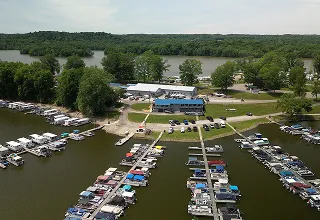
At Charles Mill Marina, we believe buying a used pontoon should come with more confidence than simply hoping everything works.
That's why our used boat purchases include two important benefits:
A 30-Day Warranty After the Sale
We provide a 30-day warranty following the sale of our used boats. That means you're not simply buying a boat and being sent on your way without any dealer-backed warranty protection.
It's an added layer of confidence that isn't typically available when purchasing from a private individual.
Be sure to ask us about the specific warranty terms and coverage when considering a boat.
An On-Water Lesson Before Delivery
We also believe you should know how your boat operates before you take it home.
Prior to delivery, we provide an on-water lesson so you can operate the boat, familiarize yourself with the controls, and make sure everything is working to your satisfaction.
You'll have an opportunity to see how the boat performs, ask questions, and become more comfortable with its operation.
We don't think your first experience driving your new-to-you pontoon should be figuring everything out by yourself at the boat ramp.
That's part of what we believe a proper dealership experience should look like.
So, Should You Buy a Used Pontoon Boat From a Private Seller or a Dealer?
There are certainly good boats available through private sellers. You can occasionally find a great deal, and we're not suggesting every privately owned boat is a bad purchase.
But there's more to consider than the asking price.
When comparing a private-party boat with one from an established dealership, consider what you're actually getting.
| What matters | Private seller | Charles Mill Marina |
|---|---|---|
| Used boat selection | Depends on individual listings | Dealer inventory |
| Boat condition evaluation | Buyer's responsibility | Dealer evaluation |
| 30-day warranty | Not typically included | Included |
| On-water lesson | Depends on seller | Included before delivery |
| Help after purchase | Depends on seller | Dealership support |
A boat that costs a little less upfront isn't necessarily the better deal if you're taking on all the uncertainty and potential repair costs yourself.
Sometimes the peace of mind that comes with buying from a reputable dealer is worth the difference.
Frequently Asked Questions About Buying a Used Pontoon Boat
How many hours are too many on a used pontoon boat motor?
There isn't a universal number of engine hours that makes a used outboard motor a bad purchase. Maintenance history, storage conditions, operating habits, and overall mechanical condition are often more important than hours alone. Have the motor evaluated by a qualified marine technician before purchasing.
What is the most important thing to check when buying a used pontoon boat?
The outboard motor and the structural condition of the boat should be two of your biggest priorities. Engine problems, damaged pontoons, and deteriorating decking can lead to expensive repairs. A thorough inspection and on-water test are highly recommended.
Is buying a used pontoon boat from a dealership worth the extra money?
It can be. Purchasing through an established marine dealership may provide additional confidence through boat evaluations, warranty coverage, and assistance after the sale. At Charles Mill Marina, our used boats include a 30-day warranty and an on-water lesson before delivery.
Should I test drive a used pontoon boat before buying it?
Absolutely, whenever possible. An on-water test allows you to evaluate engine performance, steering, shifting, handling, and other operating systems that cannot be fully assessed while the boat is sitting on a trailer.
What should I look for when buying a used pontoon boat in Ohio?
In addition to checking the engine, pontoons, decking, upholstery, and electrical systems, pay attention to how the boat has been stored and winterized. Ohio's seasonal temperature changes make proper winterization and storage particularly important.
How long does a pontoon boat typically last?
A well-maintained pontoon boat can provide many years of enjoyment. Its lifespan depends on construction quality, maintenance, storage, environmental exposure, and how it has been operated. Don't judge a boat's remaining life by its model year alone.
Ready to Find Your Next Pontoon?
Buying a used pontoon boat should be exciting. It should be something you look forward to, not something that leaves you wondering whether you made a mistake every time you turn the key.
At Charles Mill Marina, we understand that purchasing a boat is a significant investment. That's why we want our customers to feel comfortable with what they're buying and confident when they leave our dealership.
With a 30-day warranty after the sale and an on-water lesson before delivery, we offer more than just a boat. We offer an additional level of confidence in your purchase.
If you're looking for a new or used pontoon boat in North Central Ohio, take a look at our current inventory or stop by and talk with our team.
Because there's a big difference between buying a boat and buying a boat from someone who's willing to stand behind it.