

.webp)
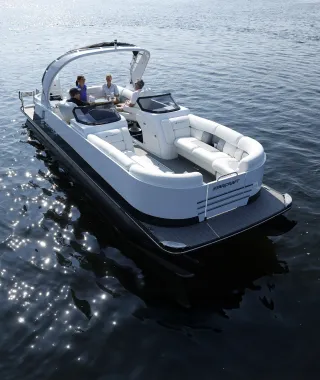

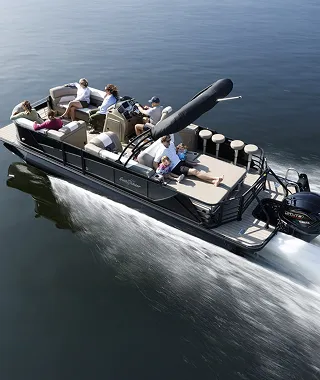

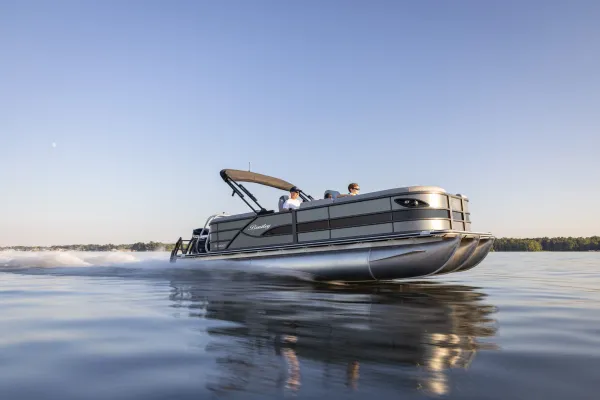







Pontoon boat pricing has more layers than most buyers realize. Some of the biggest cost drivers aren’t obvious until someone slows down and explains them. At Charles Mill Marina, we walk customers through these factors every day so they know exactly what they’re paying for and why certain boats cost more than others.
Here are the seven main factors that influence the price of a pontoon boat more than anything else in 2026.
1. The Size of the Boat (And Whether It’s a Tritoon)
This is the most straightforward factor, but it’s also the one buyers tend to underestimate.
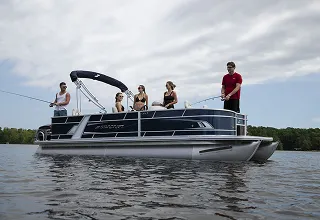
A 16-foot pontoon is a whole different world from a 22- or 24-foot model. The longer the boat, the more aluminum, decking, furniture and hardware it takes to build it. Bigger boats can also carry bigger engines, so the price climbs quickly.
Another major size-related factor is whether the pontoon has a third tube. A tri-toon adds lift, stability and performance, but it also adds a significant amount of material and labor. It’s not unusual for a tri-toon version of the same model to cost several thousand dollars more.
Examples from our lineup:
- Qwest keeps many models compact and lightweight, which helps keep pricing low.
- Starcraft and SunChaser offer a broad size range, including 22- and 24-foot models that show where size begins to impact price.
- Bentley tends to offer larger setups at a more affordable price point than many competitors, which is one reason the brand is so popular.
If you’ve ever wondered why two pontoons look similar but one jumps in price, the size and tube configuration are usually the first clues.
2. The Engine You Choose (This One Has the Biggest Price Swing)
The engine is almost always the single largest price driver other than the boat itself.
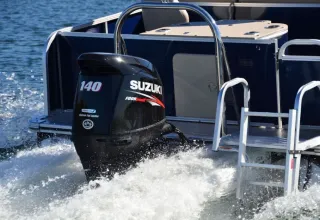
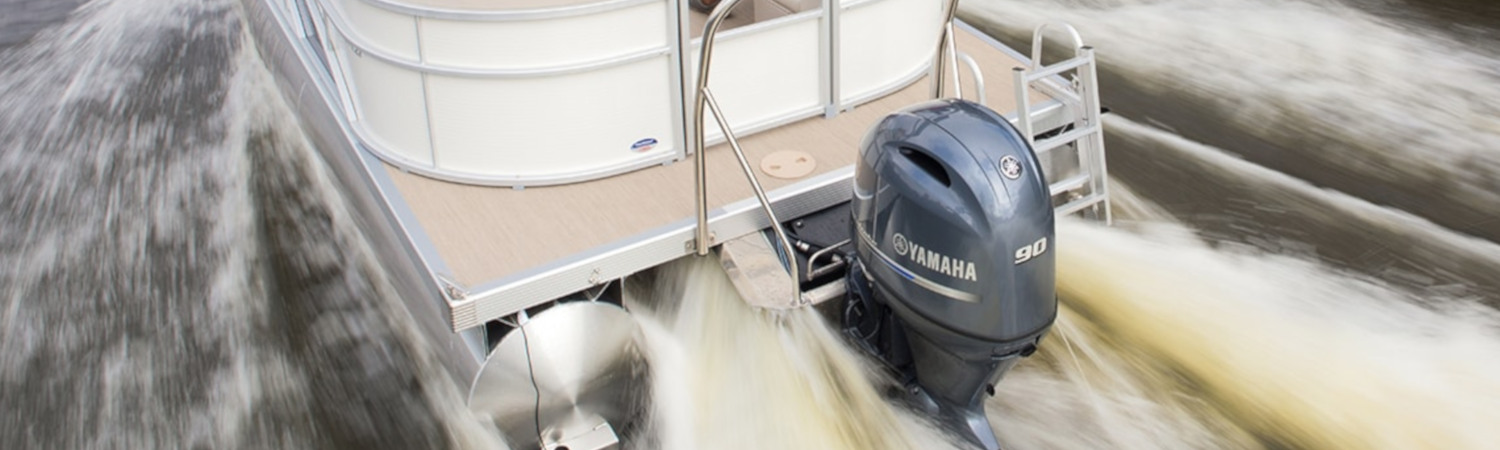
A jump from a Yamaha 60 HP to a Yamaha 90 HP can add thousands of dollars. Moving to a Yamaha or Suzuki 150 HP adds even more. And if you go from a 150 to a 200, you’ll see another sharp jump.
Why does horsepower cost so much?
Higher horsepower engines require more advanced engineering, more robust internal components and more sophisticated fuel systems. They also change what the boat can do. You get faster acceleration, more top-end speed and better handling when loaded with friends or family.
General trends:
- Yamaha is known for top-tier reliability and strong resale value, which often makes it the higher-priced option.
- Suzuki tends to be more budget-friendly while still offering excellent performance, especially in the 90 to 150 HP range.
If two identical boats have wildly different prices, compare the engines. That’s usually where the difference lies.
3. Furniture Quality and Comfort Level
Pontoon seating isn’t all created equal.
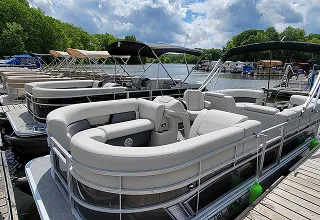
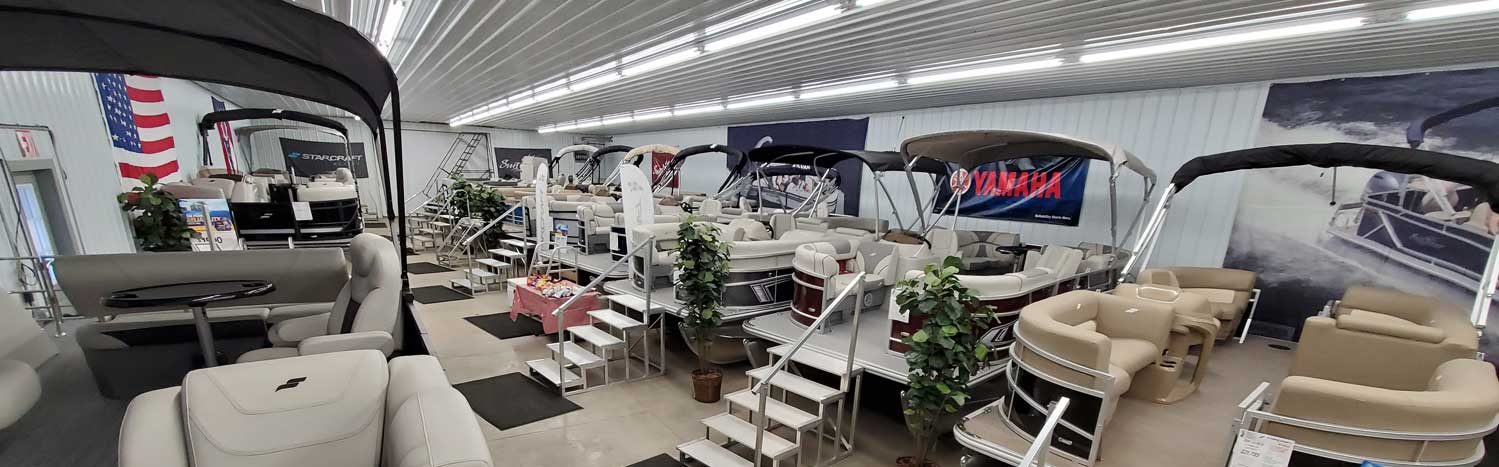
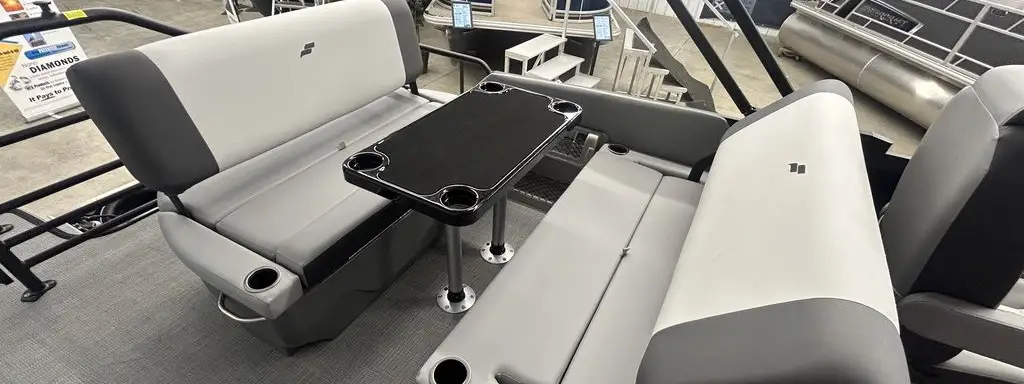
Some brands use basic vinyl and simple foam. Others use multi-density foam, UV-resistant vinyl, reinforced stitching and luxury-style captain’s chairs. Better furniture lasts longer, stays comfortable and holds up against sun exposure, moisture and repeated use.
Brand examples:
- Qwest uses simpler, lightweight seating for its smaller pontoons, which keeps cost down.
- SunChaser and Starcraft offer comfortable mid-tier seating, one reason they attract families looking for good value.
- Bentley often surprises buyers with how much seating you get for the price, but even then, premium cushions and furniture upgrades add cost.
Furniture doesn’t seem like a big deal until you compare a premium interior with a basic one side-by-side. Most buyers instantly notice the difference.
4. Flooring Options (This One Surprises People)
Believe it or not, the flooring on a pontoon can change the price significantly.
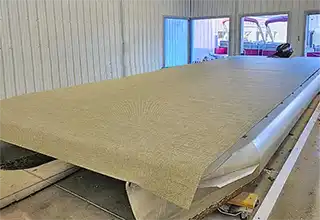
Carpet was always the cheapest option, but in the last 15 years woven vinyl is the near consensus choice. High-end options like foam-backed flooring or premium textured vinyl can increase the price of the boat more than people expect.
The flooring covers the entire deck, so the cost adds up quickly based on square footage. And once you’ve stepped on premium flooring, it’s hard to go backward.
5. The Layout and How the Deck Is Configured
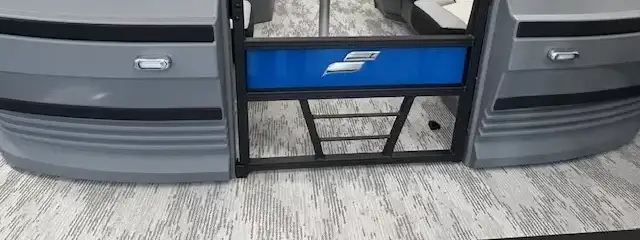
Certain layouts cost more because they require more labor or more complex furniture.
For example:
- Rear-facing loungers cost more than basic benches.
- Features like flip-up bars, changing rooms, and fishing stations add cost.
- Entertainer layouts with tables and mid-boat modules add cost.
- Fishing front decks, trolling motor panels and livewells add cost.
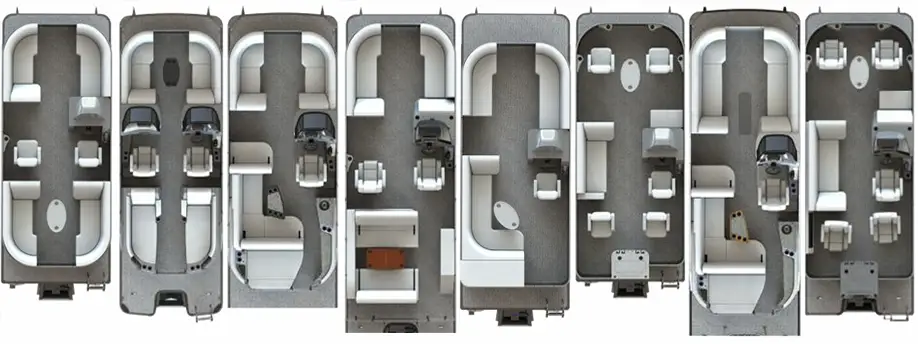
Two 22-foot pontoons might look similar in photos but have very different internal layouts, and those differences can impact the price by thousands.
SunChaser and Starcraft are known for offering a lot of layout options, while Qwest specializes in compact designs and Bentley focuses on simple, popular floorplans. All of this affects pricing.
6. The Technology, Controls and Accessories You Choose
Just like cars, boats can be basic or loaded with tech.
Some of the features that raise the price:
- Digital engine controls
- Premium sound systems
- Extra speakers and subwoofers
- GPS and depth finders
- RGB lighting
- Power biminis
- Ski tow bars
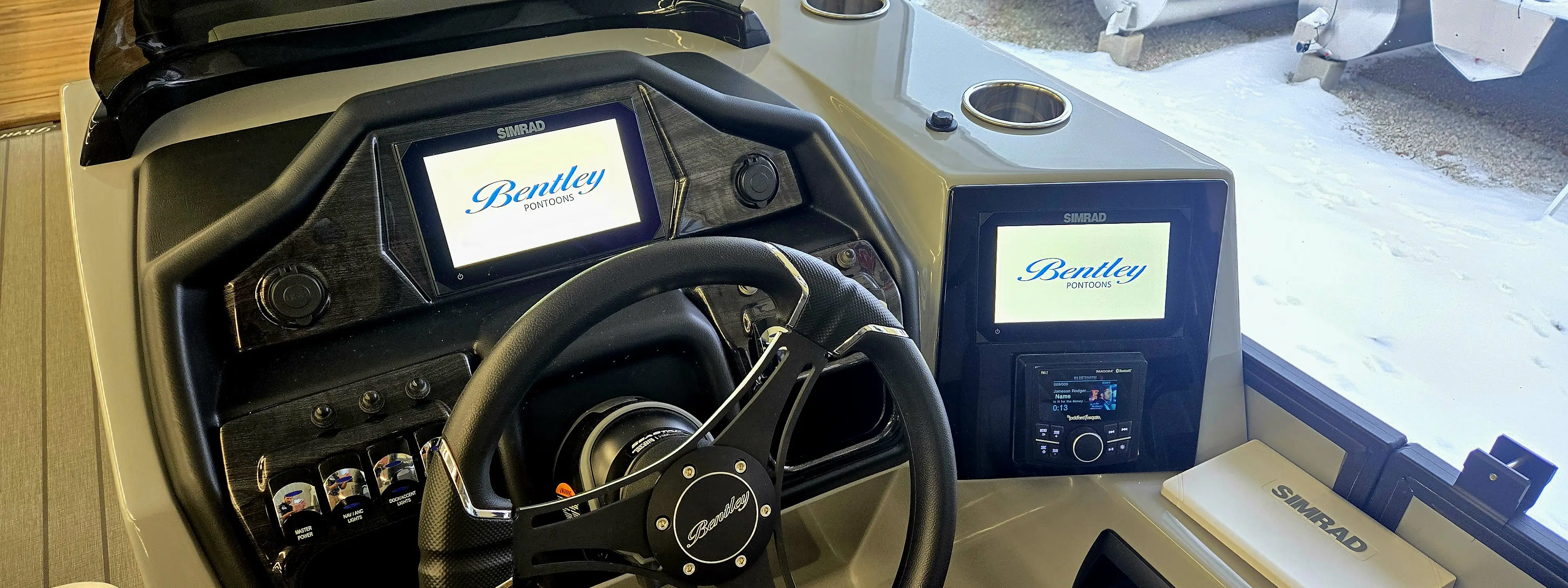
Even something as simple as moving from an analog gauge package to a digital touchscreen helm can add a surprising amount to the price.
Customers often overlook tech until they use a boat that has it. Then it becomes hard to go without.
7. The Brand You Choose (And What That Brand Is Known For)
Every pontoon brand has a different build philosophy. Some focus on entry-level affordability. Some focus on value. Some focus on higher-end finishes. These choices affect the final price.
Here’s how the brands we carry tend to position themselves:
Qwest
Compact, lightweight and highly affordable. Designed for small lakes, couples and small families.
SunChaser
A great value brand with strong mid-tier features that don’t jump into luxury pricing.
Starcraft
Known for durability, family-friendly layouts and strong resale value. A classic mid-range leader.
Bentley
A strong option for buyers who want a lot of boat for the money. Bentley offers comfortable layouts and reliable construction.
Sometimes the brand alone explains why one boat costs more than another. The build quality, materials and features that come standard all influence the final number.
So What Makes the Biggest Difference?
If you want to know what matters most to the final price, here’s the simple breakdown:
- Engine size
- Boat length
- Tri-toon vs. pontoon
- Furniture level
- Flooring
- Layout complexity
- Tech and accessories
The more of these you upgrade, the higher the price climbs.
Final Thoughts: What Should You Focus On?
Instead of deciding based on price alone, think about how you want to use the boat.
If it’s mostly relaxing sunset cruises, you don’t need a 150 HP engine. If you’re planning to tow tubes and entertain a full crew, you may want the extra power. If comfort matters more than speed, look at seating first. If you want something simple and easy to manage, Qwest can be a great option. If you want good value with plenty of room, SunChaser and Starcraft both shine. And if you want a roomy layout that fits a friendly budget, Bentley often hits the sweet spot.
Your pontoon should fit your lifestyle, your lake and your long-term plans. When those things line up, the price makes sense.